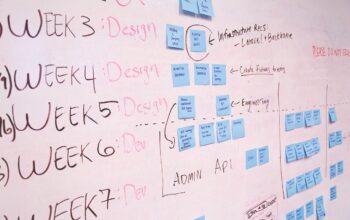
Hook: The Puzzle of Teamwork Imagine your team as a group trying to assemble a giant jigsaw puzzle without seeing the picture on the box. Coordination and communication are key to fitting those pieces together. Luckily, in 2025, several collaboration frameworks act as the guiding picture on the box, making teamwork smoother and more effective.
1. Microsoft 365 Copilot: The AI-Powered Collaborator
Microsoft is transforming team collaboration with its AI-infused Microsoft 365 Copilot. Picture a virtual assistant who not only joins your meetings but remembers action items, assigns follow-ups, and keeps track of progress across Outlook, Planner, and Loop.
Real-world win: At a marketing firm, the team reported saving hours weekly as Copilot synthesized meeting notes and auto-generated task lists, reducing back-and-forth emails.
Key features:
- Intelligent meeting recap
- Threaded action items
- Integration across multiple productivity apps
This AI acts like a diligent team member who never misses a detail, easing the cognitive load on humans.
2. Google Workspace with Duet AI: Collaboration, Seamlessly
Google Workspace is stepping up with Duet AI, embedding artificial intelligence across Gmail, Docs, Meet, and Chat. Imagine having an expert sidekick that summarizes meetings, generates documents instantly, and bridges live and async work.
Concrete example: A distributed software company used Google’s AI to prepare quick project briefs from lengthy video calls, allowing developers in different time zones to jump into tasks without waiting.
Noteworthy aspects:
- Real-time content synthesis
- Async and live collaboration blend
- Developer tools for custom experiences
Google’s approach emphasizes flexibility, letting teams shape AI to fit their workflows.
3. Teamhood: Kanban-First, Agile-Ready
For teams craving visual clarity, Teamhood offers a Kanban-first platform inspired by Agile methodology. Think of it as a dynamic whiteboard where tasks swim through lanes representing progress.
User story: An engineering agency used Teamhood to untangle complex projects by visualizing workflows, tracking time, and managing budgets—all directly on the Kanban board.
What stands out:
- Ergonomic Kanban boards with swimlanes
- Interchangeable Gantt and Kanban views
- Native time tracking and cost management
Easy to learn for beginners but powerful enough for experienced project managers, Teamhood makes complex projects feel manageable.
4. Calm Technology in Collaboration Tools
The rising philosophy of “calm technology” is changing how tools support teams. Imagine your software working quietly in the background like a trusty refrigerator humming away, only alerting you when it truly matters.
Why it matters: In remote or hybrid teams, over-notification can cause burnout. Calm tech respects your focus, providing just enough information at the right time.
How it looks in practice:
- Shared workflows auto-update project statuses
- Smart notifications replace redundant check-ins
- Email clients prioritize urgent messages based on behavior
This trend fosters trust and smooth collaboration by reducing noise and honoring attention.
5. NotebookLM: The Collaborative AI Research Assistant
Google’s NotebookLM is becoming the secret weapon for team projects requiring deep research. It’s like having a researcher who digests piles of documents, then crafts mind maps and summaries tailored for your team.
Team impact: A university research group shared notebooks openly, enabling each member to access AI-generated FAQs and audio summaries without sifting through all original files.
Cool features:
- Document-grounded AI answers
- Visual mind maps
- Public sharing with easy access
NotebookLM solves the old “who read what?” problem and makes research collaboration more accessible.
Wrapping It Up: Building Better Teamwork Whether it’s AI assistants that remember what you don’t, visual platforms that map work like highways, or technology that respects your focus, these frameworks show that good collaboration is as much about smart tools as it is about people.
Next time your team tackles that giant jigsaw puzzle, remember — the right framework paints the picture you need to finish it faster and with less stress.
Quick Recap Table:
| Framework | Core Strength | Real-World Example |
|---|---|---|
| Microsoft 365 Copilot | AI meeting and task automation | Marketing firm saving hours weekly |
| Google Workspace AI | Async/live collaboration blend | Software company’s timezone sync |
| Teamhood | Agile Kanban visualization | Engineering agency workflow clarity |
| Calm Technology | Noise reduction & smart notifications | Remote teams reducing burnout |
| NotebookLM | AI-driven research collaboration | University group sharing notebooks |
This mix of smart automation, user-friendly design, and human respect marks the future of how teams work together in 2025 and beyond.
References:
- https://thedigitalprojectmanager.com/tools/best-collaboration-tools/
- https://www.appsruntheworld.com/top-10-collaboration-software-vendors-and-market-forecast/
- https://niftypm.com/blog/task-management-software/
- https://luxafor.com/software-trends-that-are-transforming-workspaces/
- https://www.tomsguide.com/ai/forget-chatgpt-heres-why-notebooklm-is-better-for-team-projects
- https://www.proofhub.com/articles/top-project-management-tools-list
- https://www.proprofsproject.com/blog/free-project-management-software/
- https://smallbiztrends.com/slack-unleashes-ai-tools-to-streamline-team-collaboration-and-decision-making/