Hook: Why Supply Chains Are the Heartbeat of 2025 Business
Ever wonder how your coffee makes it to your cup or how your online orders arrive on time despite global chaos? The secret sauce lies in today’s cutting-edge supply chain innovations. In 2025, real businesses are turning to tech and new strategies, not just to survive, but to thrive.
1. AI-Powered Supply Chain Optimization: Smarter, Not Harder
Artificial Intelligence is no longer sci-fi in supply chains — it’s the hot game-changer. Real companies are adopting AI to tweak everything from ingredient sourcing to warehouse management. AI adoption for new product development (NPD) surged 60% in 2025, enabling firms to cut costs by up to 15% and free up valuable warehouse space.
Think of AI as a super-smart assistant that spots inefficiencies and plans smarter routes or inventory levels, reducing waste and delays. Even with warehouse space tight—vacancies hit 7.3%, a 12-year high—AI helps companies squeeze more out of what they have.
Example: Food and beverage companies are embracing AI not only to invent new products but also to navigate complex regulatory compliance automatically.
2. Workforce Strategy Revamp: Beyond Hiring
Traditionally, leaders just hired more people when demand surged. Now, the smartest supply chain bosses see workforce planning as a strategic puzzle.
They’re blending internal staff with external partners and managed services, crafting hybrid teams that flex with peaks and shifts. Forget the idea that robots will do it all; warehouses still need tech-savvy, safety-focused humans.
Modern workers juggle cross-training, data tools, and productivity dashboards designed to keep morale, safety, and output high.
Real talk: One distribution center moved from chasing warm bodies to building partnerships with staffing firms that share the risk — and reward — improving efficiency without burnout.
3. Nearshoring Gains Ground: The New Geography of Supply
Global trade is getting a makeover. Meaning? Companies are moving operations closer to home — a strategy called nearshoring.
Nearshoring cuts down on pesky headaches like unpredictable tariffs, long shipping delays, and cultural misunderstandings. Picture a U.S. firm shifting production from distant Asia to Mexico to boost speed and control.
AI and automation host this trend, helping nearshore teams work smarter by trimming repetitive tasks and allowing focus on high-value work.
Insight: Nearshoring isn’t just about cost savings anymore — it’s about proximity, faster decision-making, and stronger partnerships.
4. Digital Makeover for Supply Chain Education: Preparing Tomorrow’s Leaders
The supply chain world is turbo-charging its own future. Universities are updating curriculums to meet Industry 4.0 demands — blending data analytics, AI, and hands-on simulations.
Peter Ralston, a supply chain professor, emphasizes that learning systems now focus on real-time visibility, predictive analytics, and tech tools like Enterprise Resource Planning systems.
This means tomorrow’s supply chain pros won’t just shuffle boxes—they’ll navigate complex digital maps, predict demand fluctuations, and optimize global operations.
Example: Students train with ERP software to understand everything from inventory to production schedules — real-world skills needed immediately.
5. Navigating Warehouse Capacity Crunch with Tech
Industrial warehouses are feeling the squeeze, with vacancy rates hitting a 12-year high, even as rent rises.
How do businesses cope? Many are turning to technology and smart planning. Automation and predictive analytics guide staffing and inventory better to reduce wasted space and costs.
Construction of new warehouses is booming, but it’s not a quick fix. Instead, tech helps businesses optimize existing layouts and processes to handle more with less.
In practice: Companies use labor management systems to predict demand surges and align safety metrics, ensuring workers aren’t overwhelmed while meeting shipment deadlines.
Why This Matters: As supply chains face unpredictable markets, these five trends show real companies reshaping their game — not just in theory, but with actionable strategies and tools. From AI helping warehouses breathe easier, to workforce makeover moves, and geographic shifts closer to home, the supply chain is not just moving goods; it’s moving the business future forward.
Fancy a peek behind the curtain? These trends connect in a web of smart technology and human strategy, proving that supply chains in 2025 are more agile, resilient, and innovative than ever before.
Tags: AI Innovation, Workforce Management, Nearshoring Trends, Supply Chain Education, Warehouse Tech
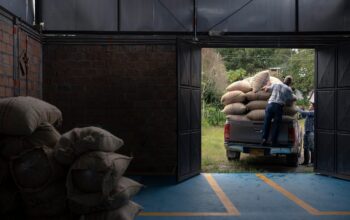
Featured Image: Modern warehouse with workers and technology
References:
- https://www.traxtech.com/ai-in-supply-chain/ai-adoption-accelerates-while-industrial-market-faces-capacity-crunch
- https://www.prnewswire.com/news-releases/key-trends-reshaping-manufacturing-in-2025-amid-supply-chain-volatility-revealed-in-new-report-from-info-tech-research-group-302515272.html
- https://www.inboundlogistics.com/articles/why-the-smartest-supply-chain-leaders-are-replacing-traditional-warehouse-hiring-in-2025/
- https://frontallusa.com/blog/rise-of-nearshoring-a-global-trade-in-2025-supply-chain
- https://www.supplychaindive.com/news/supply-chain-management-programs-are-undergoing-a-digital-makeover/753640/
- https://www.ismworld.org/supply-management-news-and-reports/news-publications/inside-supply-management-magazine/blog/2025/2025-07/supply-chain-news-roundup-ai-use-is-up-and-so-are-warehouse-vacancies/
- https://kencogroup.com/reports-and-insights/supply-chain-trending-midyear-report-2025/
- https://www.supplychaindive.com