Engineering software is evolving rapidly in 2025, driven by AI and automation technologies that are reshaping how engineers work every day. Let’s dive into five trending tools that are making waves and look at how real professionals are using them to solve practical problems.
1. AI Code Generators (e.g., GitHub Copilot, Amazon CodeWhisperer)
Imagine having a smart assistant that helps you write software faster — that’s what AI code generators are doing. Developers have reported speeding up their coding tasks by over 20%, letting them focus more on creative problem-solving rather than repetitive typing. These tools understand your code context and suggest complete functions or snippets, shaving hours from typical workdays. For example, many teams now integrate these tools directly into their IDEs like VS Code or IntelliJ, making AI suggestions part of their natural workflow.
2. Retrieval Augmented Generation (RAG) Systems
RAG technology is becoming a staple for companies handling massive document databases. Instead of digging through piles of manuals and reports, engineers can query AI systems that quickly retrieve and summarize relevant info. This shift is democratizing access to crucial data, allowing even nontechnical teams to understand complex project contexts easily. Designers and engineers alike use RAG to jumpstart new projects with rich background knowledge, speeding up decision-making.
3. Automated Machine Learning (AutoML) Platforms
AutoML is lowering the barrier for implementing machine learning models in engineering solutions. By automating tedious tasks like data preprocessing, feature selection, and model tuning, these platforms let users deploy intelligent systems without deep expertise. Organizations are adopting AutoML to optimize predictive maintenance or improve quality control, blending data science with practical engineering.
4. Full-Stack AI Code Assistants (e.g., Replit)
Think of it as an AI pair programmer that not only writes code but runs and deploys entire projects. This holistic approach is changing how small teams and beginners approach software engineering by handling the whole workflow. It’s like having an expert developer available 24/7, building confidence and accelerating delivery.
5. Python Development Environments (e.g., PyCharm)
Python’s popularity continues to soar because it supports everything from AI to automation. Development environments tailored to Python help engineers write, test, and debug code efficiently. Real-world stories highlight how Python’s simplicity paired with powerful tools expedites prototyping and scaling critical engineering software.
Why does this matter? These tools don’t just add flashy new tech — they change how engineers tackle complex projects. By automating routine work and surfacing key insights, engineers can unleash creativity and innovate faster than ever before.
Whether you’re drafting code, searching through complicated specs, or building AI models, 2025 is proving to be a landmark year where software truly empowers engineering innovation.
Tags: AI Code Generation, Retrieval Augmented Generation, Automated Machine Learning, Developer Productivity, Python Development
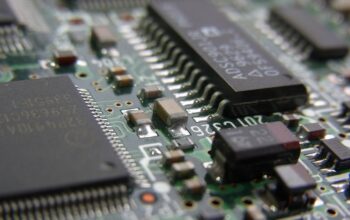
Image: Engineers collaborating with AI tools
References:
- https://dev.to/razoorka/the-state-of-ai-in-software-engineering-q3-2025-k5c
- https://www.infoq.com/articles/ai-ml-data-engineering-trends-2025/
- https://www.ey.com/en_in/services/technology/ai-augmented-software-development-a-new-era-of-efficiency-and-innovation
- https://www.infoq.com/podcasts/ai-ml-data-engineering-trends-2025/
- https://blog.jetbrains.com/pycharm/2025/09/why-is-python-so-popular/
- https://www.developer-tech.com
- https://engineering.fb.com/2025/09/26/networking-traffic/networking-at-the-heart-of-ai-scale-networking-2025-recap/