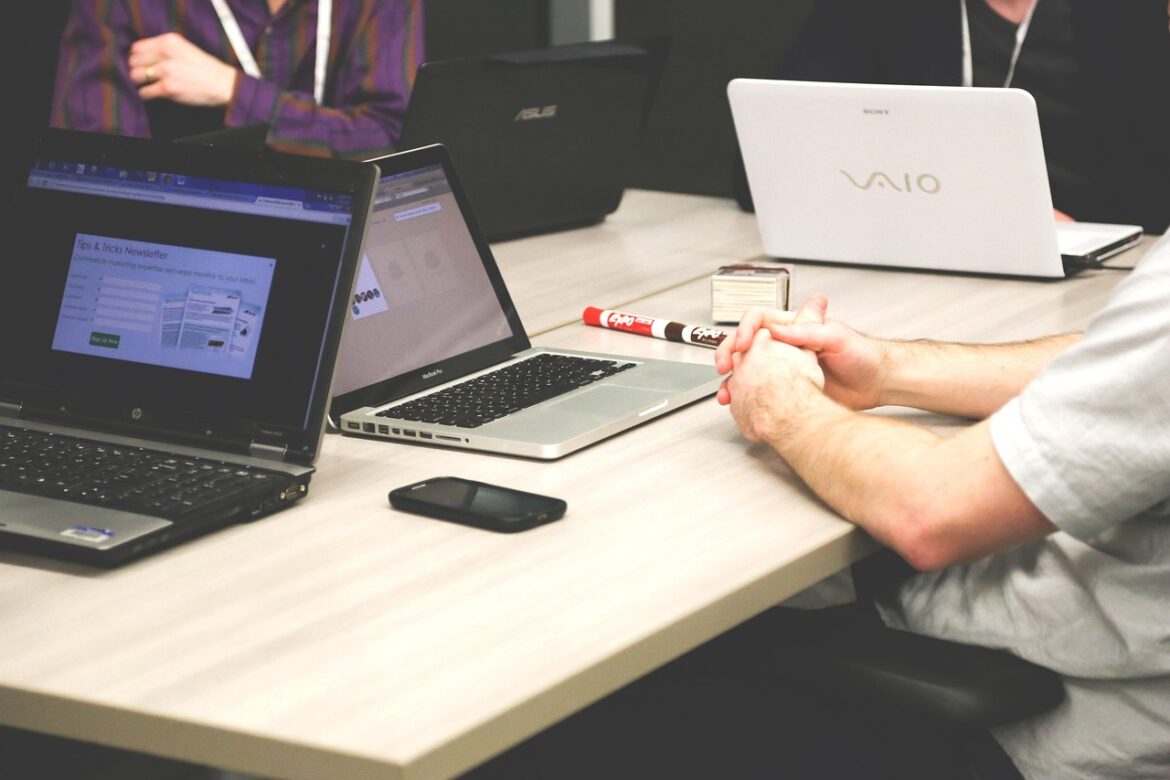
Hook: Imagine your next laptop not just as a tool, but as a frontline teammate that automates grunt work, speeds decision-making, and keeps teams connected no matter where they are.
Why this matters Digital transformation now lives on the device — laptops with on-device AI, long battery life, and hybrid-ready features are turning everyday workflows into measurable business gains.
Trending models (real-world impact stories)
-
Apple MacBook Pro (M5 era): Startups and creative teams report using the M5-equipped MacBook Pro to prototype ML models locally and edit video faster, cutting cloud costs and time-to-delivery for client work. Experts highlight its neural engine and unified memory as the reason small teams can do heavy tasks without a server room.
-
Lenovo ThinkPad/ThinkBook line (Gen 2025 rollouts): Businesses in banking and consulting are standardizing on ThinkPads for their mix of security features and productivity tools; models like the ThinkBook Plus with expanding screens have lowered device counts in some field teams by replacing tablets and laptops with one adaptable machine.
-
ASUS ROG and ASUS AI-optimized devices (GX/Flow series): Though rooted in gaming, these machines are being repurposed by AI-first startups for local model tuning — developers appreciate the raw GPU power and portability that lets them test prototypes before scaling to cloud training.
-
HP EliteBook Ultra and Samsung Galaxy Book5 Pro: Sales teams and hybrid office workers praise these laptops for webcam and conferencing improvements, smart noise reduction, and battery life — features that translate directly into smoother client meetings and fewer dropped calls.
What companies are actually doing (concrete examples)
- A boutique design agency replaced its shared render server with M5 MacBooks for three designers, reducing cloud render bills and accelerating client revisions.
- A regional health clinic automated administrative triage on staff laptops, freeing clinicians for patient care and reducing appointment backlog.
- A fintech startup uses an ASUS AI-capable laptop for model prototyping during investor demos — then bursts to the cloud for production, saving costs during early development.
Practical takeaways for leaders
- Prioritize on-device AI and battery life for mobile-first teams.
- Standardize a small set of models that balance security, support, and specialized tasks (e.g., design, data science).
- Think of laptops as sensors and edge compute — they reduce cloud dependency and speed iteration.
Final note from experts Practitioners emphasize leading with the problem, not the shiny chip: pick devices that solve a real bottleneck (meetings, rendering, local ML testing), and you get measurable wins fast.
Tags: Laptop, Hybrid Work, AI Devices, Edge Computing, Productivity
References:
- https://www.24marketreports.com/consumer-goods-and-services/global-detachable-laptop-forecast-market
- https://mytechn.xyz/latest-computers-2025-top-desktop-and-laptop-picks-featuring-ai-and-revolutionary-design/
- https://vibetric.com/laptop-market-turning-point-2025/
- https://biztechmagazine.com/article/2025/12/what-kind-ai-ready-devices-do-startups-need
- https://www.windowscentral.com/hardware/laptops/best-ai-pc
- https://www.technewsworld.com/story/rob-enderles-2025-tech-product-of-the-year-180054.html
- https://fortune.com/2025/12/15/three-trends-companies-ai-enterprise-tech-aiq/