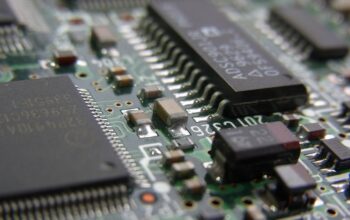
Imagine factories that predict their own breakdowns or chips so smart they power entire nations’ AI dreams. Welcome to engineering in 2026, where sci-fi meets shop floor.
1. The Chip Race Heating Up in AI Engineering
Picture this: companies battling like gladiators over custom silicon, not swords. In 2025, AI firms realized chips aren’t just tech—they’re power brokers. Access to efficient GPUs and specialized accelerators decided who leads the pack. Think energy-guzzling data centers turning green with smarter designs. Experts say 2026 ramps this up, with sovereign compute strategies letting countries build their own AI muscle. One strategist notes, “It’s like controlling your own oil fields, but for brainpower.”—vital for scaling AI without blackouts.
Real-world win: Massive investments in GPU clusters are already powering breakthroughs in medicine and media, proving chips make AI practical, not pie-in-the-sky.
2. Smart Manufacturing: Factories That Think
Ever wished your car knew when its brakes needed fixing before they failed? That’s smart manufacturing in action. Deloitte’s outlook nails it: 2026 factories use AI, connected gadgets, and data to watch machines live, predict issues, and tweak schedules on the fly. No more downtime surprises.
- Predictive maintenance: Spots wear before it wrecks production.
- Digital twins: Test factory changes virtually, saving cash and time.
- Career boost: Jobs now mix tech dashboards with hands-on work, from supply chains to green processes.
Take semiconductors or clean energy plants—these upgrades keep lights on in hospitals and EVs charging, making manufacturing a hero in daily life.
3. Generative AI Tailored for Heavy Industries
Forget generic chatbots. GenAI platforms in 2025-26 zero in on sectors like energy and manufacturing. Energy pros use multimodal tools—mixing text logs, photos, and diagrams—to simulate disasters or optimize rigs. It’s like having a crystal ball for oil drills or factory lines.
Pro tip from practitioners: Generate fake data for rare events, train models better, but double-check for real-world fit. This powers predictive maintenance and design tweaks, turning engineers into superheroes.
4. Modular Blockchains Building Tougher Systems
Blockchain’s no crypto fad anymore. Modular designs split tasks like Lego blocks—consensus here, data there—for scalable networks. Europe’s energy sector tracks carbon with it, while logistics hums smoother. Projects like Celestia and Polygon 2.0 prove it: real deployments in finance and supply chains, making engineering infrastructure bulletproof.
These trends aren’t lab dreams; they’re reshaping jobs, cutting waste, and fueling growth. Engineers, time to level up—the future’s building itself.
Word count: ~410
References:
- https://aiworldjournal.com/the-ai-industry-in-2025-and-what-i-expect-in-2026/
- https://www.goodwin.edu/enews/manufacturing-industry-trends-2026/
- https://inceptivetechnologies.com/what-are-the-emerging-trends-in-generative-ai-platforms-for-2025-2026/
- https://internationalconferencealerts.com/conference/electrical-and-electronics-engineering
- https://binariks.com/blog/emerging-blockchain-technology-trends/
- https://www.engineering.com
- https://civilengineering.spectrumconferences.com
- https://www.datacamp.com/blog/top-ai-conferences
- https://www.allconferencealert.com/engineering/january