Revving Up the Future: How 2025 is Steering Automotive Engineering
Car engineering isn’t just about nuts and bolts anymore. Today, it’s a fast-moving highway fueled by artificial intelligence, semiconductor breakthroughs, and shifting global collaborations. Here’s a look under the hood at five of the most exciting real-world stories shaping automotive engineering in 2025.
1. Silicon Chips Powering Smarter Cars
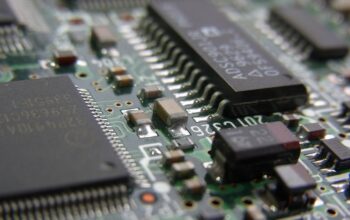
The brain behind next-gen cars is no longer just a conventional microcontroller; it’s powerful semiconductor chips that enable features like advanced driver-assistance systems (ADAS) and fully autonomous driving.
Imagine your car’s processor working like a top athlete juggling many tasks fast and flawlessly. It fuses input from cameras, radar, lidar, and ultrasonic sensors to “see” the environment in real time and make split-second decisions. This level of computing requires chips capable of tera-operations per second (TOPS).
What’s revolutionary is the rise of Software-Defined Vehicles (SDVs): cars where software updates can unlock new features or improve performance without a visit to the garage. This transformation demands close teamwork between chip designers and automotive engineers, moving from simple buyer-supplier relations to co-creators of advanced vehicle platforms.
2. AI Accelerating Engineering Simulations by 500x
Ever wish you could fast-forward through test drives and countless design tweaks? Companies like Nvidia are making this possible by using AI to turbocharge computational simulations.
Take aerospace and automotive engineering as examples. With AI and GPU acceleration, engineers can simulate complex airflow dynamics and material behaviors much faster and with great precision. This means they can quickly prototype, optimize, and bring efficient vehicles to market sooner. It’s like having a supercharged wind tunnel inside a computer.
3. Flexible Manufacturing for a Hybrid Future
The automotive industry is playing a balancing act between traditional combustion engines, hybrids, and electric vehicles (EVs). To navigate this, manufacturers are adopting flexible production lines capable of making all three types.
Consider it like a chef preparing multiple meals on the same stove without skipping a beat. This agility helps companies meet fluctuating market demands and regulations, especially in regions where EV adoption has slowed.
Particularly notable is China’s role in reshaping this landscape, with its cost advantages and supply chain dominance pushing global manufacturers to seek partnerships to stay competitive.
4. Collaborative Efforts to Launch Level 4 Robotaxis
Stellantis, Nvidia, Uber, and Foxconn have teamed up to push the frontiers of autonomous vehicle technology.
Imagine city streets quietly bustling with self-driving robotaxis that use advanced cameras, sensors, and AI-powered software to safely ferry passengers without human drivers. The project’s AV-Ready platforms are designed to be flexible, scalable, and safety-focused to adapt to various urban transportation needs.
Uber plans to deploy thousands of these vehicles worldwide, marking a real-world test of fully driverless mobility that could redefine how we get around.
5. People-First Digital Transformation in Auto Manufacturing
Behind every sleek new vehicle is a factory embracing digital tools, data, and automation — but with a human touch. Industry gatherings like AMNA 2025 highlight how automotive companies are not just installing new tech, but embedding it within lean and people-centric production cultures.
Think of it as upgrading both the hardware and software of a factory. Using data-driven management, rigorous standards, and ongoing workforce training, companies are boosting productivity and quality while keeping workers engaged.
This approach balances the speedy adoption of innovations like electrification with practical realities on the shop floor.
Looking Ahead:
From the high-speed lanes of AI-powered chips and simulations to collaborative autonomous fleets, automotive engineering in 2025 is a showcase of technology meeting real-world challenges. The trend is clear: success hinges on integrated software-hardware platforms, flexible manufacturing tuned to market dynamics, and digital transformation that keeps people front and center.
As these innovations roll out, the way we design, build, and experience vehicles will be transformed — putting us all on the road to a smarter, safer, and more efficient automotive future.
References:
- https://www.financialcontent.com/article/tokenring-2025-10-30-the-silicon-lifeline-geopolitical-fissures-and-the-future-of-automotive-innovation
- https://blogs.nvidia.com/blog/ai-physics-aerospace-automotive-design-engineering/
- https://www.mane.co.uk/resources/blog/automotive-industry-2025–a-year-of-transformation-and-challenge/
- https://www.stellantis.com/en/news/press-releases/2025/october/stellantis-advances-global-robotaxi-strategy-with-new-collaboration-with-nvidia-uber-and-foxconn
- https://www.automotivemanufacturingsolutions.com/smart-factory/amna-2025-auto-industry-looks-to-data-driven-peoplefirst-digital-transformation/1609938
- https://www.cardesignnews.com/events/review-2025-autodesk-automotive-summit-shanghai/1517668
- https://njbiz.com/rutgers-rowan-new-jersey-engineering-innovation/
- https://www.magna.com/stories/news-press-release/2025/magna-ramps-up-driver-and-occupant-monitoring-system-deployment-in-china-with-germany-based-oem
- https://pressroom.toyota.com/toyota-group-previews-future-products-and-brand-direction-at-2025-japan-mobility-show/
- https://news.engin.umich.edu/2025/10/2-5m-aluminum-research-partnership-aims-to-expand-use-in-auto-industry-and-beyond/